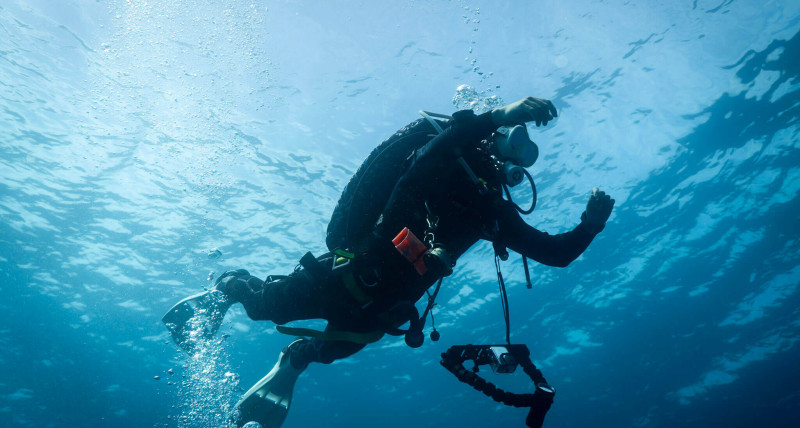
A dive in La Herradura, in the municipality of Almuñécar, is an underwater journey to the paradise of the Costa Tropical. The bay, which gets its name from its shape, protects it from the winds and provides refuge for a great deal of marine biodiversity.
The Maro-Cerro Gordo Cliffs give it its unique characteristics, bordering on a tropical style, and are perfect for enjoying diving.
If you want to know more about La Herradura, here is a complete guide to the fauna, the seabed, and the species that make this place a cult destination for diving.
Types of Seabeds
La Herradura is not a lifeless place, far from it; we find different types of reliefs and textures.
• Posidonia Oceanica Meadows: Posidonia, although often mistaken for seaweed, is a higher plant that flowers and produces fruit. They are the “lungs” of the Mediterranean and provide home and security to hundreds of marine species.
• Rocky Bottoms and Overhangs: The cliff walls of Cerro Gordo plunge vertically into the water. They also create caves, crevices, and passageways that play with the light and create incredible landscapes.
• Sandy and Gravel Bottoms: In the central areas of the bay, the sandy bottoms are home to fauna known for their camouflage skills, such as octopuses.
Marine Fauna
If there’s one word that draws divers to La Herradura, it’s life. The biodiversity is immense, and many fish species are larger than they are typically found in other parts of the country.
At Punta de la Mona, it’s common to encounter the large grouper (Epinephelus marginatus) and pollack. Nudibranchs, small slugs in shells with bright, electric colors, are also abundant. We’ll also see the peregrine snail (Cratena peregrina) on the hydrias.
If you gaze into the vastness of the sea, you’re likely to see schools of fish moving in synchronized motion; most likely they’ll be barracudas.
And that’s not all. You don’t need to dive to great depths to enjoy all the biodiversity. Places like Marina del Este or La Calita showcase seahorses, moray eels, conger eels, octopuses, damselfish, and wrasse. The latter two are striking in their colors: while damselfish are black, wrasse are vibrantly colored.
Key Points for Diving
| Dive Site | Level | Best in the Area |
| La Punta de la Mona | Advanced | Orange corals (Astroides calycularis) and large pelagic species. |
| Marina del Este | All | Easy access from the beach and a wide variety of nudibranchs. |
| Cerro Gordo | Intermediate | Underwater caves and spectacular topography. |
| Los Cantiarrales | Beginner | Shallow waters with plenty of light and juvenile marine life. |
The orange coral at Punta de la Mona deserves special mention. To enjoy it, you need to be an expert diver, as seeing it requires venturing into the wall, which means contending with strong currents. Thanks to the coral, the wall has a distinctive, bright orange hue.